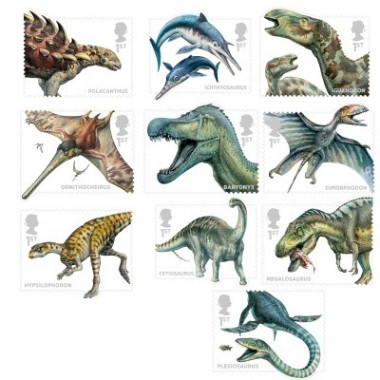
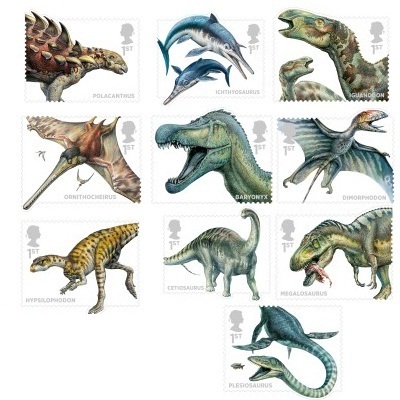
| Polacanthus |
| The heavily armoured Polacanthus was protected from predators by a host of spikes and studs. |
|
| Ichthyosaurus |
| Adapted to life in the sea, the Ichthyosaurus breathed air and gave birth to live young in the water. |
|
| Iguanodon |
| The herbivorous Iguanodon was able to walk on all fours, but would run using only its hind legs. |
|
| Ornithocheirus |
| This relative lightweight flew mainly by soaring and gliding, catching fish by skimming the sea. |
|
| Baryonyx |
| With a name meaning ‘heavy claw’, the thumb claw alone of the Baryonyx was more than 40cm long. |
|
| Dimorphodon |
| With its one metre wingspan and two types of teeth, the Dimorphodon preyed upon fish. |
|
| Hypsilophodon |
| The long shins of the Hypsilophodon suggest that a speedy escape was its main means of defence. |
|
| Cetiosaurus |
| The Cetiosaurus was a herbivore thought to weigh as much as 20,000kg, the same as 20 cars. |
|
| Megalosaurus |
| The fearsome Megalosaurus grew up to nine metres in length, and preyed upon other Dinosaurs. |
|
| Plesiosaurus |
| With its vast paddles, the Plesiosaurus hunted fish and other marine prey at an estimated 8kph. |
|
| DesignWhy Not Associates |
| IllustrationJohn Sibbick |
| Stamp format /sizeLandscape 37mm x 27mm excluding protrusions |
| PrinterWalsall Security Printers |
| Print processGravure |
| Perforation13.5 x 14 |
| PhosphorAll over |
| GumSelf-adhesive |
| Number per sheet25/50 |